

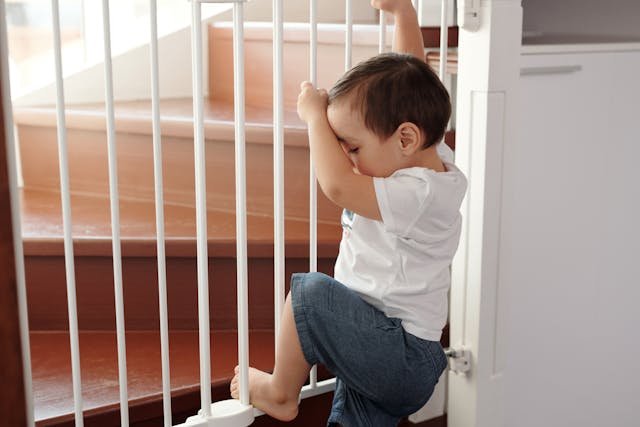
Baby-Proofing Your Home: 50 Essential Room-by-Room Safety Checks
Baby-proofing your home can feel overwhelming.
Suddenly, every cable looks suspicious, every cupboard seems dangerous and your coffee table appears to have developed far more sharp corners than it had yesterday.
The good news is that you do not need to cover your entire home in foam or buy every baby-safety product on the internet.
Effective baby-proofing means identifying the hazards that could cause serious harm, making the rooms your baby uses safer and reviewing your home whenever your child learns a new skill.
This practical UK baby-proofing checklist covers 50 essential safety checks for your living room, kitchen, stairs, nursery, bathroom, garden and more.
The quick answer: Start baby-proofing before your baby becomes mobile. Secure furniture, restrict access to stairs and windows, lock away medicines and chemicals, remove choking hazards, manage cords and create at least one safe space where your baby can explore.
When Should You Start Baby-Proofing Your Home?
A sensible time to begin baby-proofing is at around four months, before your baby begins crawling, shuffling or pulling themselves up.
You do not need to finish every task before your baby is born. A newborn will not be opening kitchen cupboards or climbing your bookcase.
However, larger jobs such as attaching furniture to the wall, installing window restrictors and choosing suitable stair gates are easier when you are not racing against a newly mobile baby.
Every baby develops differently. Some babies crawl early, some bottom-shuffle and some move straight towards standing and walking.
Related MyBoo guide: Baby Milestones Month by Month: What to Expect in the First Year
Use this simple baby-proofing timeline:
-
Before rolling: Make sleeping, changing and floor-play areas safer.
-
Before crawling or shuffling: Remove floor-level hazards and restrict dangerous rooms.
-
Before pulling to stand: Secure furniture, televisions, drawers and climbable objects.
-
Before walking: Recheck stairs, doors, windows, tables and higher surfaces.
-
Before climbing: Assume almost every reachable surface could become a step.
Baby-proofing is not something you complete once. Every new skill gives your child access to hazards they could not reach the previous week.
Start With a Baby-Level Safety Check
Before buying safety products, get onto your hands and knees and look around from your baby’s height.
Yes, you may feel slightly ridiculous.
Do it anyway.
From the floor, you may suddenly notice:
-
Loose coins under the sofa
-
Accessible charging cables
-
Blind cords
-
Extension leads
-
Wobbly lamps
-
Peeling paint
-
Small batteries
-
Pet food
-
Open handbags
-
Cleaning products under the sink
-
Sharp edges at head height
-
Furniture that could be climbed
In each room, ask:
What could my baby pull, climb, swallow, open, spill, tip over or wrap around themselves?
That question will reveal more useful hazards than buying a generic baby-proofing bundle.
Whole-Home Baby-Proofing Checklist
These hazards can appear throughout your home, so deal with them before focusing on individual rooms.
1. Secure Tall and Unstable Furniture
Attach bookcases, wardrobes, chests of drawers, freestanding shelves and display units securely to the wall.
Do not assume heavy furniture cannot fall. When a child opens drawers or uses them as steps, the weight can shift forwards.
Use suitable fixings for your wall type and follow the furniture manufacturer’s instructions.
2. Secure Televisions
Wall-mount your television correctly or use suitable anti-tip straps.
A television sitting on a unit may appear stable, but a child pulling on the screen or climbing the cabinet can quickly change its balance.
Keep remote controls and tempting objects away from the top of the television unit.
3. Keep Electrical Cables Out of Reach
Route cables behind furniture or place them inside suitable cable covers or cable-management boxes.
Pay particular attention to cables attached to:
-
Kettles
-
Lamps
-
Televisions
-
Hair straighteners
-
Irons
-
Laptops
-
Phone chargers
-
Baby monitors
A child may chew a cable, become tangled in it or use it to pull down something heavy or hot.
4. Unplug Unused Chargers
Do not leave charging leads plugged in and switched on when they are not being used.
Keep chargers off the floor and inspect them regularly for fraying, exposed wiring or damage.
5. Secure Blind and Curtain Cords
Looped blind cords can become a serious strangulation hazard.
Use the cleat, tensioner or safety device supplied with the blind and keep every cord firmly secured out of reach.
Move cots, beds, highchairs, toy boxes and climbable furniture away from corded blinds.
The Child Accident Prevention Trust’s blind-cord guidance explains why these incidents can happen very quickly and silently.
6. Make Windows Safer
Install suitable window locks or restrictors wherever a child could reach an open window.
Move beds, cots, chairs, toy boxes and other climbable furniture away from windows.
A window screen is designed to keep insects outside. It should not be treated as protection against a child falling.
RoSPA recommends window restrictors and keeping climbable furniture away from windows in its guidance on preventing falls.
7. Remove Small Choking Hazards
Check floors, low shelves, sofa cushions and spaces underneath furniture regularly.
Look for:
-
Coins
-
Buttons
-
Pen lids
-
Jewellery
-
Screws
-
Magnets
-
Small toy parts
-
Batteries
-
Food dropped by adults or older children
Repeat the check after visitors leave or older children have been playing.
8. Find Every Button Battery
Button batteries can be hidden inside:
-
Remote controls
-
Car keys
-
Kitchen scales
-
Thermometers
-
Calculators
-
Musical cards
-
Light-up toys
-
Small electronic devices
Check that battery compartments close securely, preferably with a screw.
Store new, spare and used batteries high up and locked away. A battery that appears flat may still contain enough charge to cause serious injury.
The Child Accident Prevention Trust explains the risks of button batteries and where they are commonly found.
If you believe your child may have swallowed one, go directly to A&E or call 999. Do not wait for symptoms.
9. Check Smoke and Carbon Monoxide Alarms
Make sure working smoke alarms are fitted on every appropriate level of your home and test them regularly.
Install carbon monoxide alarms where required and follow the manufacturer’s positioning instructions.
If you rent, report a missing or faulty alarm to your landlord promptly and keep the request in writing. The official GOV.UK alarm guidance for rented homes explains the requirements in England.
10. Keep Escape Routes Clear
Keep hallways, landings, stairs and routes to external doors clear of pushchairs, toys, laundry and storage boxes.
This helps prevent everyday falls and makes it easier to leave quickly during an emergency.
Living-Room Baby-Proofing Checklist
Your living room will probably become one of your baby’s main play areas.
The goal is to create a space where they can move and explore without hearing “no” every ten seconds.
11. Anchor Living-Room Furniture
Secure shelving, television units, cabinets and freestanding furniture.
Check the fixings again after moving furniture or rearranging the room.
12. Protect Genuinely Dangerous Corners
Consider firmly attached corner guards on low coffee tables, hearths and sharp furniture at your baby’s head height.
A loose corner protector can become something else to pull off and chew, so inspect it regularly.
In some homes, temporarily removing a sharp coffee table is easier than trying to cover every edge.
13. Make Fireplaces Inaccessible
Use a securely fitted fireguard around open fires, gas fires, wood-burning stoves and accessible hearths.
Keep matches, lighters, candles and fireplace tools locked away.
Remember that a fireplace, fireguard or stove may remain hot after the flame has gone out.
14. Secure Lamps and Decorative Objects
Move unstable floor lamps behind furniture or secure them so they cannot be pulled over.
Remove glass decorations, heavy ornaments and picture frames from low surfaces.
Avoid putting attractive objects on top of furniture your child might try to climb.
15. Check Houseplants
Move houseplants out of reach and check whether the plant is toxic.
Even a non-toxic plant can create a hazard if your child eats the soil, pulls the pot down or accesses fertiliser.
16. Create a Safe Floor-Play Area
Choose an area free from dangling cables, unstable furniture, choking hazards and hot surfaces.
A properly prepared floor area gives your baby room for supervised play and tummy time without you having to rearrange everything each day.
Related MyBoo guide: Tummy Time: Why It Matters and How to Make Baby Love It
Kitchen and Dining-Room Baby-Proofing Checklist
The kitchen contains heat, water, knives, chemicals, glass and heavy appliances.
It does not need to become your baby’s main playroom.
A correctly fitted safety gate can be more practical than trying to make every part of the kitchen freely accessible.
17. Lock Away Cleaning Products
Store cleaning sprays, disinfectants, washing-up products and other chemicals inside a high, locked cupboard.
Do not rely only on child-resistant packaging. Child-resistant does not mean childproof.
Keep every product in its original container. Never transfer chemicals into drinks bottles or food containers.
18. Secure Laundry and Dishwasher Capsules
Laundry capsules and dishwasher tablets may look like sweets or toys.
Store them high up, locked away, out of sight and inside their original packaging.
Do not leave a capsule on the worktop while loading the machine.
19. Lock Drawers Containing Sharp Objects
Use reliable locks on drawers containing:
-
Knives
-
Scissors
-
Peelers
-
Graters
-
Skewers
-
Corkscrews
-
Matches
-
Lighters
Check that the lock continues to hold when the drawer is pulled firmly.
20. Keep Glass and Heavy Cookware Inaccessible
Move glassware, ceramics, heavy pans and breakable serving dishes out of lower cupboards unless the cupboard is securely locked.
You could give your child one accessible cupboard containing only safe objects, such as lightweight plastic bowls, if you want somewhere they are allowed to explore.
21. Use the Rear Hob Rings
Cook on the back rings whenever possible and turn saucepan handles away from the edge.
Keep your child away from the immediate cooking area, especially when using hot oil, boiling water or oven trays.
22. Keep Appliance Cords Away From the Edge
Move kettles, toasters, air fryers, slow cookers and other hot appliances towards the back of the worktop.
Make sure no cable hangs over the edge where it could be pulled.
23. Keep Hot Drinks Out of Reach
Place tea, coffee and other hot drinks well away from babies and toddlers.
Do not balance a mug on the arm of a sofa, a low table or the edge of a worktop.
The NHS baby and toddler safety guidance warns that a hot drink can still scald a young child 15 minutes after it was made.
24. Avoid Hanging Tablecloths
A baby can pull a hanging tablecloth and bring plates, cutlery, hot drinks and serving dishes down with it.
Use placemats or a covering that does not hang within reach.
25. Use the Highchair Harness Every Time
Secure your child with the highchair’s fitted harness, even during a quick snack.
Do not rely on the tray to keep them in place.
Position the highchair away from tables, walls and worktops that your child could push against using their feet.
Related MyBoo guide: When and How to Start Weaning: A Complete Guide to First Foods
Stairs, Doors and Hallway Baby-Proofing Checklist
Babies often become interested in stairs long before they understand how to use them safely.
26. Install a Gate at the Top of the Stairs
Use a gate designed and approved for the top of a staircase.
A securely fitted wall-mounted gate is generally the better choice at the top because it does not rely solely on pressure and does not usually introduce a trip bar across the landing.
Follow the manufacturer’s instructions carefully.
27. Install a Gate at the Bottom of the Stairs
A second gate helps prevent your baby from climbing upwards without supervision.
Pressure-fit gates may be suitable for some doorways and the bottom of certain staircases, but check the product instructions and suitability for your particular location.
RoSPA recommends wall-mounted gates at both the top and bottom of stairs for children under 24 months in its falls-prevention advice.
28. Check Stair Gates Regularly
Pull and push the gate periodically to make sure the fixings remain secure.
Check that the gate closes and locks correctly every time.
Never climb over a stair gate while carrying your baby.
29. Keep Stairs Clear
Remove toys, laundry, bags and loose objects from every step.
When carrying your baby, avoid carrying so much that you cannot see the stairs or hold the handrail.
30. Protect Fingers From Doors
Use suitable finger guards or door stoppers on doors that frequently slam or trap fingers.
Check the hinge side as well as the closing edge.
31. Secure External Doors
Keep front, back, balcony and patio doors locked when they are not being actively used.
As your baby becomes a toddler, consider a lock or latch beyond their reach while making sure adults can still leave quickly during an emergency.
Nursery and Bedroom Baby-Proofing Checklist
The nursery may look calm, but attractive decorations and unnecessary sleep products can introduce hazards.
32. Keep the Cot Clear
Use a firm, flat mattress that fits the cot properly.
Keep your baby’s sleep space clear of:
-
Pillows
-
Duvets
-
Cot bumpers
-
Soft toys
-
Sleep positioners
-
Pods and nests
-
Weighted bedding
-
Loose objects
The Lullaby Trust’s safer-sleep overview recommends placing babies on their backs, using a firm and flat mattress and keeping the cot clear.
Related MyBoo guide: The Complete Newborn Sleep Guide: Wake Windows, Routines and What Actually Works
33. Place Your Baby on Their Back to Sleep
Place your baby on their back for every sleep, during both the day and night.
Use current NHS and Lullaby Trust guidance rather than unverified advice from social-media accounts.
34. Position the Cot Away From Hazards
Keep the cot away from:
-
Windows
-
Blind cords
-
Radiators
-
Heaters
-
Shelves
-
Wall decorations
-
Lamps
-
Monitor cables
-
Electrical leads
Your baby’s reach will increase quickly once they begin sitting or standing.
35. Lower the Cot Mattress at the Correct Stage
Lower the cot base according to the manufacturer’s instructions when your baby begins sitting, pulling up or standing.
Remove large toys and objects that could become steps for climbing out.
36. Secure Nursery Furniture
Attach wardrobes, bookcases and chests of drawers securely to the wall.
Use drawer stops or locks if your child starts opening drawers or using them as climbing steps.
37. Make Changing Safer
Keep nappies, wipes and clothing within your reach but outside your baby’s reach.
Never leave your baby unattended on a changing table, bed or sofa—even if they have never rolled before.
A changing mat on the floor removes the risk of falling from a raised surface.
Related MyBoo guide: The Only Newborn Essentials List You Actually Need
38. Check Second-Hand Nursery Products Carefully
Inspect pre-owned cots, highchairs and other equipment for damage, missing parts, product recalls and current safety information.
Some products should not be purchased second-hand unless you know their full history.
Related MyBoo guide: Buying Second-Hand Baby Gear: What Is Safe and What to Avoid
Bathroom Baby-Proofing Checklist
The most important bathroom safety measure does not come in a box:
Stay with your baby for the entire bath.
A bath seat is not a safety device and does not replace adult supervision.
39. Prepare Everything Before Bath Time
Collect the towel, clean nappy, clothes and toiletries before placing your baby in the bath.
This removes the temptation to step away “for just a second”.
40. Run Cold Water Before Hot Water
Run cold water into the bath first, then add hot water.
Mix the water thoroughly and check its temperature before putting your baby in.
Keep your child away from the taps while the bath is filling.
The NHS recommends running cold water first and staying with your child for the entire bath in its official home-safety advice.
41. Use a Non-Slip Bath Mat
Use a properly fitted non-slip mat once your child begins sitting or standing in the bath.
Empty the bath immediately after use.
Never leave buckets, baby baths or other containers filled with water.
42. Lock Away Medicines and Toiletries
Store medicines, vitamins, razors, nail scissors, cosmetics, mouthwash and cleaning products high up and preferably locked away.
Do not rely on child-resistant caps alone.
Remember to check visitors’ bags because they may contain tablets, cosmetics or other hazardous items.
43. Keep Electrical and Heated Items Inaccessible
Keep hairdryers, electric shavers, hair straighteners and curling tongs away from baths and sinks.
Place heated styling tools out of reach while they are being used and while they cool down.
Make sure their cables cannot be pulled.
Laundry, Office and Pet-Area Baby-Proofing Checklist
These spaces are often overlooked because they may not appear child-focused.
Your baby will not care what the room was designed for.
44. Secure Laundry Appliances
Keep washing-machine and tumble-dryer doors closed.
Check inside appliances before using them, especially once your toddler becomes interested in climbing and hiding.
Keep detergent and stain-removal products locked away.
45. Baby-Proof Your Home Office
Store paperclips, drawing pins, staples, batteries and small stationery items inside closed drawers.
Secure laptop cables, lamps, printers and shredders.
Lock away nicotine products, e-cigarettes and refill liquids.
46. Keep Handbags and Work Bags Off the Floor
Handbags may contain tablets, coins, cosmetics, keys, batteries, hand sanitiser and other small objects.
Create a high, designated storage place for both household and visitor bags.
47. Separate Babies and Pets When Needed
Supervise all contact between your child and pets.
Give pets a separate place to eat, sleep and retreat without being followed.
Keep pet food, medicines, litter trays, waste bags and small pet toys away from your baby.
Garden, Balcony and Outdoor Baby-Proofing Checklist
A fenced garden is not automatically child-safe.
Inspect outside areas from your baby’s level just as you would indoors.
48. Remove Access to Water
Fence off, cover securely or remove access to:
-
Ponds
-
Paddling pools
-
Water features
-
Buckets
-
Water butts
-
Open containers
Empty paddling pools immediately after use and store them away.
Young children should always be supervised around water.
49. Lock Sheds and Outdoor Storage
Keep tools, fertilisers, pesticides, barbecue products, fuels and chemicals inside a locked shed or cabinet.
Check the garden regularly for mushrooms, poisonous plants, animal waste, broken glass and small objects.
50. Make Balconies and Gates Secure
Keep balcony doors locked when the balcony is not being supervised.
Move furniture, storage boxes and planters away from balcony railings so they cannot become climbing steps.
Check garden gates and fences for gaps, loose boards and access to roads, neighbouring gardens or water.
Do You Need Plug Socket Covers in the UK?
In most modern UK homes, plug-in socket covers are not necessary.
Standard UK 13-amp sockets that comply with BS 1363 already contain integral safety shutters.
Electrical Safety First advises parents not to rely on blanking plugs because a cover cannot make an unsafe electrical installation safe. You can read its electrical safety advice for parents.
Instead:
-
Keep cables out of reach.
-
Repair damaged plugs or sockets.
-
Avoid overloading extension leads.
-
Unplug unused chargers.
-
Keep hot appliances and their cables inaccessible.
-
Make sure the property has suitable RCD protection.
-
Ask a qualified electrician to inspect anything concerning.
Do not encourage your child to play with sockets, even when they appear protected.
What Baby-Proofing Products Do You Actually Need?
You probably do not need a huge pre-packed baby-proofing kit.
Choose products based on the genuine hazards inside your home.
Useful items may include:
-
Furniture anchor straps
-
A wall-mounted top-of-stairs gate
-
A suitable bottom-of-stairs gate
-
Cupboard and drawer locks
-
Window locks or restrictors
-
Blind-cord safety devices
-
Cable-management boxes
-
A securely fitted fireguard
-
Door-finger guards
-
A non-slip bath mat
-
Corner guards for genuinely sharp furniture
Buying fewer, properly installed products is better than attaching cheap safety gadgets everywhere and assuming the job is complete.
Before buying used safety equipment, check its instructions, condition, missing parts and product-recall history.
Baby-Proofing a Rented Home
Renting does not mean you must ignore serious hazards.
Speak to your landlord before drilling into walls or making permanent changes. Explain that the work is necessary for child safety and request written permission.
Report the following promptly:
-
Unsafe windows
-
Broken locks or restrictors
-
Damaged sockets
-
Loose stair rails
-
Faulty smoke alarms
-
Missing carbon monoxide alarms
-
Unstable landlord-supplied furniture
-
Exposed wiring
-
Serious damp or disrepair
For less permanent baby-proofing, consider:
-
Adhesive cupboard locks
-
Cable-management boxes
-
Non-slip mats
-
Moving furniture away from windows
-
Using furniture layouts to block access
-
Suitable pressure-fit gates in approved locations
However, damage-free is not always safer. A gate at the top of the stairs usually needs a secure, purpose-appropriate installation.
Quick Baby-Proofing Checklist
Before calling the job complete, check that:
-
Furniture and televisions are secured.
-
Stairs have correctly fitted gates.
-
Windows have appropriate locks or restrictors.
-
Blind cords are secured out of reach.
-
Medicines and chemicals are locked away.
-
Button batteries are securely stored.
-
Small choking hazards have been removed.
-
Appliance and charging cables are inaccessible.
-
Hot drinks remain out of reach.
-
Cooking equipment cannot be pulled down.
-
The cot is clear and follows safer-sleep guidance.
-
Bath time is always supervised.
-
Smoke and carbon monoxide alarms work.
-
Garden water hazards are inaccessible.
-
Visitor bags are kept off the floor.
-
Safety products are checked regularly.
-
The home is reviewed after every new developmental skill.
Frequently Asked Questions About Baby-Proofing
When Should I Start Baby-Proofing My Home?
Begin preparing at around four months and aim to complete the main floor-level, furniture, stair and window checks before your baby becomes mobile.
Review your home again when your baby begins crawling, pulling to stand, walking and climbing.
Which Room Should I Baby-Proof First?
Start with the room where your baby spends most of their awake time.
For many families, this is the living room. Then prioritise the stairs, kitchen, bathroom and your baby’s sleep space.
Do I Need Plug Socket Covers in the UK?
Standard UK sockets that comply with BS 1363 already have built-in shutters, so plug-in blanking covers are generally unnecessary.
Focus on safe wiring, inaccessible cables, undamaged sockets and suitable RCD protection.
Do I Need Stair Gates at Both the Top and Bottom?
Once your baby becomes mobile, gates at both ends help prevent unsupervised access.
Use a gate designed for its intended location. The top gate should be securely fitted and should not create an unnecessary trip hazard across the landing.
Can Baby-Proofing Replace Supervision?
No.
Safety products reduce risks and give adults more time to react, but they cannot make a room completely safe without supervision.
How Often Should I Check My Baby-Proofing?
Inspect gates, locks, anchors, cords and other safety equipment regularly.
Repeat your room-by-room check whenever your child develops a new skill or can reach a new surface.
What Should I Do if My Baby Swallows Something Dangerous?
Call 999 for an immediate or life-threatening emergency.
If you suspect your child swallowed a button battery, go directly to A&E or call 999. Do not wait for symptoms.
For other urgent concerns, contact NHS 111 and follow any instructions supplied with the product.
A Final Word From MyBoo
Baby-proofing your home is not about preventing every wobble, bump or minor accident.
Children learn through exploration, and exploration will never be completely risk-free.
Your goal is to remove the dangers that could cause serious harm while giving your child spaces where they can move, learn and be curious.
Start with the biggest risks. Work through one room at a time. Check everything again whenever your baby learns something new.
You do not need a perfect home.
You need a home that is ready for the tiny person who is about to find every hazard you missed.




💬 Join the conversation